
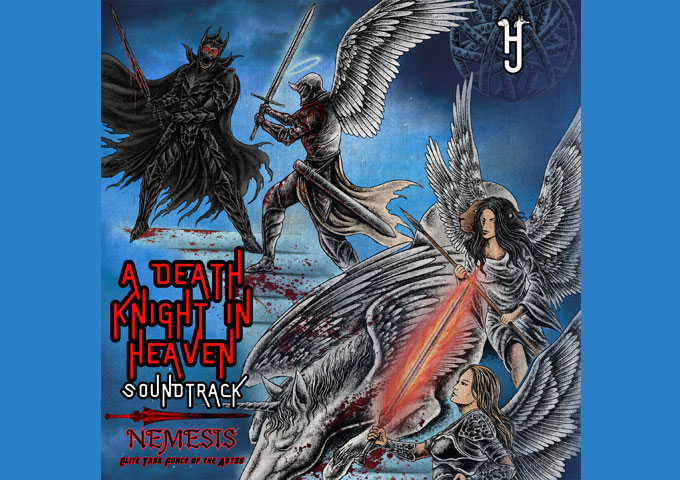
There are albums that tell stories, and then there are albums that build worlds so vivid they seem to hum with their own gravity. Hounds & Jackals’ audacious release A DEATH KNIGHT IN HEAVEN (Nemesis: Elite Task Force of the Abyss) belongs firmly in the latter category. This is not merely a record but a transmedia incantation, a collision of music, tabletop gaming mythology, animated nostalgia, and philosophical provocation, all orchestrated by the endlessly inventive Bruce Ballon, self-styled Jackal of all Trades and cosmic wandering canine.
At its core, Hounds & Jackals is a project born from a deeply human impulse: to explore creativity as a pathway to understanding mental health. Using games, music, magic, and interactive media, the project frames heavy themes in entertaining, offbeat ways that invite curiosity rather than intimidation. The album emerged organically as an extension of gaming material, yet it quickly mutated into something far more ambitious. What began in the strange, isolating days of 2020 as a single adventure, A Death Knight in Heaven, evolved into a sprawling omniversal saga once a stubborn melody refused to stay silent. That melodic seed detonated during the creation of ASSIGNMENT: DANGER, expanding into a full-blown fantasy planescape thriller with the energy of Mission: Impossible and the heroic menace of The Guns of Navarone.
The result is NEMESIS, an elite task force drawn from the Realms of Chaos, standing in opposition to the Celestials, beings who believe absolute order is the cure for all evil. Their solution is chillingly simple: erase free will across the cosmos. This inversion of moral expectation is the album’s philosophical backbone. In the bizarro topsy-turvy omniverse of A DEATH KNIGHT IN HEAVEN (Nemesis: Elite Task Force of the Abyss), what is traditionally labeled “good” becomes tyrannical, while monsters, outcasts, and abyssal entities fight to preserve choice, identity, and chaos as the true engines of life.
Musically, the album is drenched in love for 1980s cartoon themes, sci-fi serials, action shows, and horror television, filtered through the lens of classic fantasy literature by writers like Roger Zelazny and Michael Moorcock. Sweeping orchestral arrangements collide with dynamic percussion and cinematic sonic auras. Bold vocal performances, choral passages, and dramatic narrative arcs give each track a sense of place and purpose. Every song corresponds to a faction, location, or confrontation within the upcoming NEMESIS TTRPG campaign, transforming the album into a guided tour of the astral planes.

The opening track, “NEMESIS Elite Task Force of the Abyss”, sets the tone with operatic scale and narrative urgency. Vocalist Emina Bajtarević, embodying the Demiurges Vimmy and Sammy, delivers a performance that balances ferocity with gravitas. The song reframes the Celestials’ crusade as a dystopian “soul-washing” operation, where forced holiness becomes a reality-altering weapon. The Abyss’s elite team, led by a Death Knight and accompanied by a commando Nightmare named Colonel Bogey, a sentient soul-eating sword, a quasit, and a demonic spider, must sabotage a missile armed with a Redeemium Warhead before free will itself is scrubbed from existence. It is tactical, theatrical, and thrilling, a manifesto disguised as a battle hymn.
That ideological conflict is pushed to its most unsettling extreme in “I Am the Power!”, voiced with chilling authority by Ziberia as Ziberiel the Celestial. Here, the album steps directly into the mind of a zealot who equates individuality with moral failure. The song’s structure mirrors its message, tightening into a suffocating vision of enforced peace. Its climax imagines a universe locked in static perfection, a flawless diamond that gleams beautifully while containing nothing alive within. It is one of the album’s most disturbing moments, precisely because its logic is seductively coherent.
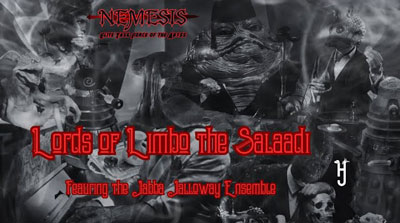
Dark humor surfaces in “Lords of Limbo: the Salaadi”, with Theo as Jab Jalloway guiding listeners through a grotesque cosmic outpost inspired by Mos Eisley cantina mythology. The Salaadi are giant limbo-entity toads, cordial hosts who fatten their guests before eating them. The song dances between playful menace and outright horror, underscoring a central lesson of the multiverse’s lawless fringes: politeness does not equal safety. Composer Mario Dupont, Keeper of the Tuba of Fate, shines here, weaving theatrical runs and melodic motifs with an undercurrent of dread that never fully resolves.
The tempo accelerates violently with “Beware the Git’Cheekee”, a high-energy assault led by Mateusz Bakiera channeling the voice of Mumm-Ra. Serving a draconic undead sovereign, the Git’Cheekee are astral pirates of aristocratic cruelty, blending psychic dominance with brute force. The track paints them as a vanity-driven plague upon the silver sea, relishing their own legend even as they devastate everything in their path. It is aggressive, bombastic, and exhilarating, a reminder that chaos has many faces, not all of them sympathetic.
Perhaps the album’s most emotionally resonant piece is “Fair Sequestria”, featuring Imago Latens as Nightfall Imago, with harmonies by Thomas Hoffmann and Volodymyr Chyzhovych. This song chronicles the fall of a proud warrior race subtly conquered by the Celestials and transformed into docile, ornamental ponies. Beneath its melodic beauty lies a sharp critique of so-called protectorates that strip autonomy under the guise of safety. It is a call to arms, urging the enslaved herds to remember their carnivorous heritage and reclaim their strength. The emotional weight here speaks directly to themes of identity erosion and learned helplessness, tying back to the project’s mental health mission.

The album closes its vocal arc with “Kenobytes”, voiced by Martina Questa as Legate Lamentina. A grotesque fusion of Ken and Barbie aesthetics with Hellraiser and Borg imagery, the Kenobytes are Celestial stormtroopers who assimilate dissenters into mechanical obedience. The song explores dehumanization through forced assimilation, where emotions are surgically excised and individuality reduced to function. It is a visceral indictment of cosmic imperialism, rendered with cold precision and tragic inevitability.
Each vocal track is followed by an instrumental counterpart, reinforcing the cinematic nature of the work and inviting listeners to imagine their own scenes within the narrative. The bonus instrumental “Corby & Scratch” adds a final layer of dark whimsy, telling the story of a dog and crow from The Omen series who have become cosmic nannies for demonic children. Even here, humor and horror remain inseparable.
Visually, the album’s identity is completed by Raden Norfiqri, Moon-not-glum, whose character illustrations give faces to the madness and anchor the music’s surreal scope.
A DEATH KNIGHT IN HEAVEN (Nemesis: Elite Task Force of the Abyss) is experimental, unapologetically strange, and fiercely intelligent. It challenges listeners to reconsider morality, authority, and the price of perfection, all while delivering a thrilling sonic adventure. Hounds & Jackals have not simply released an album; they have opened a portal. Step through, and the multiverse will test what you truly believe is worth saving.
OFFICIAL LINKS:
You may also like
-
Wizherd Delivers Pure Exhilarating Energy on “Hey DJ (Radio Edit)”
-
The Fods & Night Wolf Reimagine “Kickback” Into a Trip Hop-Infused Anthem of Hope
-
Downtown Royalty’s “Homemade Bad” Is the Rock Album Texas Has Been Waiting For
-
Circus Mind Strikes Gold with Groove-Heavy New Single “Whole Lotta Nuthin”
-
Lois Powell & Night Wolf’s “The Laws Of Life” Turns Quiet Reflection into Emotional Strength