

How visual QR codes can connect album artwork, merchandise, social media and real-world promotion to the music fans want to hear.
Artvizual QR Codes: Turning Album Covers Into Interactive Music Promotion
Album artwork has always been an important part of music promotion. It is often the first visual fans see on streaming platforms, social media, posters, websites and physical merchandise.
But album artwork can do more than look good.
With a visual QR code integrated directly into an album cover or promotional design, artists can turn static artwork into a direct connection between the physical or digital promotion and the music, content or campaign behind it.
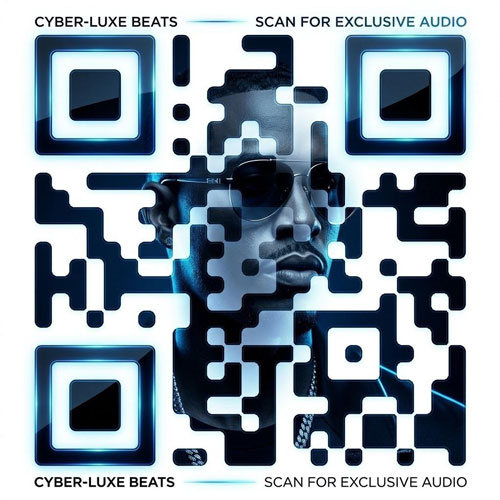
This is where Artvizual’s approach to QR code design comes in. Instead of placing a standard black-and-white QR code on an album cover as an afterthought, the QR code can become part of the visual identity of the artwork itself.
What Is a Visual QR Code for Music Promotion?
A visual QR code is a QR code that has been creatively integrated into an image or design while retaining the structure needed for scanning.
For musicians, this can mean incorporating the QR code into:
- Album covers
- Single artwork
- EP artwork
- Music posters
- Concert flyers
- Tour merchandise
- T-shirts and hoodies
- Vinyl and CD packaging
- Stickers
- Business cards
- Press kits
- Social media graphics
- Digital advertisements
- Music festival promotions
The important difference is that the QR code becomes part of the creative concept rather than simply being placed next to it.
For example, an artist with a jungle-themed album could have the QR code incorporated into the artwork as part of the environment. A hip-hop artist could integrate it into graffiti, typography or a street-inspired design. A rock band could make the QR code part of a darker photographic composition.
The result is still functional, but it has a reason to exist visually.
Turn Album Artwork Into a Gateway to Your Music
A traditional album cover communicates visually.
A QR-enabled album cover can also provide a direct action.
A fan scans the code and can be taken to a destination such as:
- Spotify
- Apple Music
- YouTube
- SoundCloud
- Bandcamp
- An artist’s website
- A new single
- A pre-save campaign
- A music video
- A tour page
- A mailing-list signup
- Exclusive content
- Merchandise
- A landing page containing multiple streaming options
This creates a simple path:
See the artwork → scan the QR code → discover the music.
That connection is particularly useful when artwork appears somewhere that is not already connected to the streaming platform.
Why QR Codes Can Work for Both Online and Offline Music Promotion
One of the biggest advantages of QR codes is that they connect two environments that normally operate separately.
Online promotion happens through platforms such as Instagram, TikTok, YouTube, websites and streaming services.
Offline promotion happens through posters, flyers, clothing, packaging, stickers, events and physical advertising.
A QR code can connect the two.
Imagine an artist’s poster displayed at a music venue.
Someone sees the artwork but does not know the artist.
Instead of having to remember the artist’s name, search for them later and find the correct song, they can scan the QR code immediately.
The same principle can work with a T-shirt, album sleeve, sticker or event flyer.
That makes the QR code more than a link. It becomes a bridge between physical attention and digital action.
QR Codes on Merchandise Create Another Discovery Point
Merchandise is an especially interesting application.
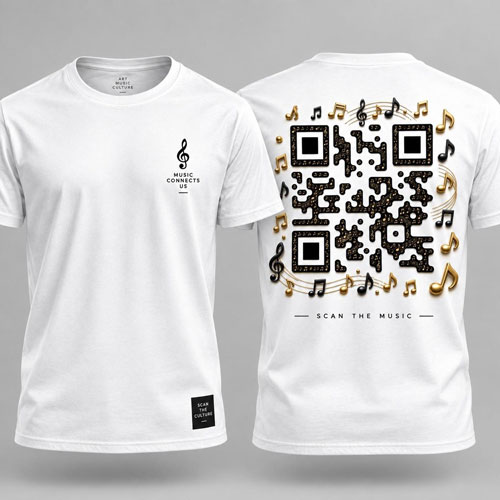
A fan wearing an artist’s T-shirt is already carrying the artist’s branding into the real world. Adding a QR code can give that piece of merchandise another function.
For example, the QR code could lead to:
Front of shirt:
Artist branding or album artwork
Back of shirt:
Visual QR code + “Scan to listen”
The destination could be the artist’s latest release, website, tour dates or merchandise store.
The same concept can be applied to:
- Hoodies
- Caps
- Tote bags
- Stickers
- Posters
- Vinyl sleeves
- CD cases
- Packaging
- Limited-edition merchandise
This also creates something interesting from a marketing perspective: the promotion can continue after the original purchase or event has finished.
More Scan Opportunities Can Mean More Opportunities to Discover the Music
A QR code cannot guarantee streams, followers or sales.
What it can do is reduce the number of steps between someone noticing an artist and actually accessing the artist’s content.
That distinction matters.
If an artist relies entirely on someone remembering their name and searching for them later, there are several opportunities for that person to lose interest.
With a well-placed QR code, the action can happen immediately.
For example:
Poster → scan → song
T-shirt → scan → album
Album cover → scan → music video
Concert flyer → scan → tickets
Sticker → scan → artist website
The more relevant places an artist gives fans to discover the music, the more opportunities there are for those interactions to happen.
The key is not simply adding more QR codes. The QR code needs to be placed where people have a genuine reason to scan it.
A QR Code Can Be More Than a Spotify Link
Another mistake is thinking that every music QR code needs to point directly to one streaming platform.
A campaign can be much more flexible.
For example, an artist could use one QR code that opens a landing page containing:
- Spotify
- Apple Music
- YouTube
- SoundCloud
- Bandcamp
- TikTok
- Artist website
That can be particularly useful when the audience uses different platforms.
A campaign can also use a dedicated landing page for a specific release.
Instead of sending fans to a generic homepage, the QR code could take them directly to:
NEW SINGLE OUT NOW
with the song, video, lyrics, social links and other relevant information in one place.
The Same QR Code Can Support a Campaign Beyond Release Day
A music campaign often changes after the initial release.
Before release, the artist may want to promote a pre-save campaign.
On release day, the destination could become the new single.
Later, the same campaign could promote the music video.
A few weeks later, it could highlight tour dates or merchandise.
With a dynamic QR setup, the destination can potentially be changed without having to redesign and reprint every physical asset.
That can be especially useful for artists running longer campaigns across posters, merchandise and printed material.
The physical artwork stays the same while the digital destination can evolve with the campaign.

From Album Cover to Campaign System
The most interesting use of a branded visual QR code is not necessarily a single album cover.
It can become part of a wider visual system.
An artist could create a consistent QR design that appears across:
Album artwork → posters → social posts → merchandise → stickers → event materials → packaging
That gives the QR code its own visual identity.
Fans can start recognizing it as part of the artist’s branding while still having a practical reason to scan it.
For a new release, this can create a consistent journey from the first promotional image all the way to the physical products surrounding the release.
Practical Music Promotion Ideas Using Visual QR Codes
Here are some ways artists and music marketers could use the concept:
1. New Single Campaign
Place a QR code on posters and social graphics that leads directly to the new single.
2. Album Release
Integrate the QR code into the album artwork and use it on physical promotional materials.
3. Music Video Promotion
Use a QR code on posters or merchandise that opens the official video.
4. Concert Promotion
Let people scan a venue poster to view tickets, dates and location information.
5. Tour Merchandise
Connect clothing to the artist’s current release, website or tour information.
6. Vinyl and CD Packaging
Add an interactive digital layer to physical music products.
7. Limited Editions
Use a QR code to provide access to bonus tracks, behind-the-scenes content or another exclusive digital experience.
8. Festival Promotion
Artists performing at festivals can use QR-enabled promotional material to direct new listeners toward their music.
9. Street Promotion
Stickers and posters can become direct discovery points rather than simply displaying an artist’s name.
10. Press and Media Kits
A QR code can provide journalists, bloggers and industry contacts with music, videos, artwork and artist information from one location.
Why This Matters for Independent Artists
Major artists have large marketing teams, advertising budgets and established audiences.
Independent artists often need promotional material to work harder.
A single poster might need to communicate who the artist is, promote the release and give someone a reason to listen.
A T-shirt can function as merchandise, branding and a potential discovery point.
An album cover can represent the music while also providing access to the campaign behind it.
That is the interesting opportunity with visual QR codes.
Instead of treating the QR code as an additional graphic element, artists can make it part of the promotional strategy.
Artvizual Creates QR Codes Designed Around the Artwork
Artvizual creates custom visual QR codes designed to fit the creative direction of a project rather than simply placing a standard QR code onto an existing design.
The QR code can be developed around the visual style of an artist, album, single, campaign or merchandise concept.
The goal is straightforward:
Make the QR code visually interesting enough to belong in the artwork while keeping it functional enough to scan.
For music projects, that can mean creating QR codes specifically for album covers, singles, posters, merchandise, promotional campaigns and other artist materials.
The QR destination can also be selected around the campaign objective, whether that means sending listeners to a streaming service, music video, website, landing page, ticket page or another digital destination.
From a Static Image to an Interactive Music Experience
Music promotion is increasingly visual.
Artists are competing for attention across album artwork, short-form video, social media, physical advertising and merchandise.
A QR code gives those visuals an additional layer.
The artwork catches someone’s attention.
The QR code gives them an action.
The landing page or music platform delivers the content.
And the campaign can continue from there.
For artists, labels and music marketers, that creates a simple opportunity: turn the places where people already see the music into places where they can immediately discover it.
Interested in creating a visual QR code for an album cover, single, poster or merchandise campaign? Artvizual can create a custom QR design around the visual identity of your project.
You may also like
-
Joel Doria’s “Electronic Pulsations”: Repairing the Human Heart in an Electronic World
-
Javier Rodríguez Announces Sydney World Premiere of The Silent Mediterranean
-
MegaDestroyer Pushes Beyond Rock’s Boundaries With Electrifying New Single “Beneath the Lights”
-
So-Star and Chris Hardy Turn “Gossip Rules The World” Into a Powerful Synth-Pop Warning About Rumor
-
Chris Daytona Brings SupertrapNB and RageNB to the Next Generation of Hip-Hop